Why Your Skin Barrier Is Damaged (And How to Repair It)
July 8, 2026 2026-07-08 15:44Why Your Skin Barrier Is Damaged (And How to Repair It)

Why Your Skin Barrier Is Damaged (And How to Repair It)
Is Your Skin Trying to Tell You Something? Does your skin feel tight, dry, irritated, or suddenly become more sensitive than usual? If your favorite skincare products now sting or your complexion looks dull despite following a routine, your skin barrier may be damaged.
Your skin barrier is your body’s first line of defense. It protects your skin from pollution, bacteria, harsh weather, and moisture loss. When this protective layer becomes weakened, your skin struggles to stay healthy and balanced.The good news? With the right care and consistency, you can restore your skin barrier and bring your skin back to its healthiest state.
What Is the Skin Barrier?
The skin barrier, also known as the outermost layer of your skin, acts like a shield. It keeps hydration locked in while blocking harmful environmental irritants from entering your skin.
A healthy skin barrier leaves your skin feeling smooth, hydrated, and resilient.
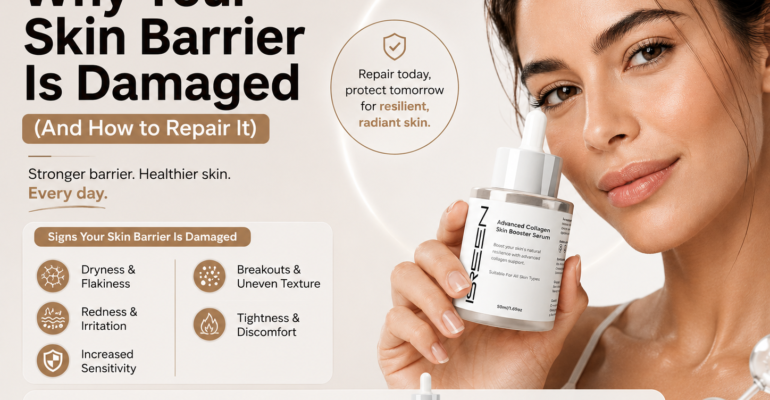
Signs of a Damaged Skin Barrier
You may have a damaged skin barrier if you notice:
Persistent dryness and flakiness
Redness and irritation
Burning and stinging after applying skincare products
Increased sensitivity Rough texture
Breakouts that won’t heal easily
Dull-looking skin
Excessive oil production caused by dehydration
What Causes Skin Barrier Damage?
Several everyday habits can weaken your skin barrier:
Over-Exfoliation
Using exfoliating acids or scrubs too often can strip away your skin’s natural protective oils.
Harsh Cleansers
Strong cleansers containing drying ingredients can disrupt your skin’s natural balance.
Overusing Active Ingredients
Using retinol, exfoliating acids, or vitamin C too frequently without allowing your skin time to recover may cause irritation.
Environmental Stress
Sun exposure, pollution, cold weather, and dry indoor air can weaken your skin’s protective layer.
Hot Water
Very hot showers or face washing can remove natural oils and leave your skin vulnerable.
Lack of Moisture
Skipping moisturizer or not drinking enough water can contribute to dehydration.
How to Repair Your Skin BarrierSimplify Your Routine
Reduce your skincare routine to the essentials:
Gentle cleanser
Hydrating serum
Nourishing moisturizer
Broad-spectrum sunscreen during the day
Here’s your content with improved formatting, proper headings, bullet points, and consistent spacing for a professional SEO blog.
Focus on Hydration
Choose skincare products containing hydrating and barrier-supporting ingredients such as:
- Hyaluronic Acid
- Ceramides
- Peptides
- Glycerin
- Panthenol
These ingredients help replenish moisture and support your skin’s natural repair process.
Pause Strong Active Ingredients
If your skin is irritated, temporarily stop using strong active ingredients such as:
- Retinol
- Exfoliating acids (AHAs and BHAs)
Give your skin time to recover before gradually reintroducing these products.
Moisturize Consistently
Apply a moisturizer every morning and evening to:
- Strengthen your skin’s protective barrier
- Reduce moisture loss
- Keep your skin hydrated throughout the day
Consistency is one of the most important steps in supporting skin barrier recovery.
Never Skip Sunscreen
Ultraviolet (UV) rays can slow your skin’s healing process and increase irritation.
Make sunscreen a daily habit by using a broad-spectrum SPF every morning to help protect your recovering skin from environmental damage.
Be Patient
Skin barrier repair takes time.
Depending on the severity of the damage, noticeable improvement may take several weeks with a gentle, consistent skincare routine.
Avoid expecting overnight results—healthy skin is built through consistency.
How ISREEN Supports Healthy-Looking Skin
Healthy skin starts with hydration and consistency.
Products formulated with hydrating, skin-loving ingredients can help:
- Maintain skin moisture
- Improve the appearance of skin texture
- Support your skin’s natural protective barrier
Adding a hydrating serum to your daily skincare routine can leave your skin feeling:
- Softer
- Smoother
- More refreshed
With regular use, your skin can appear healthier and more radiant over time.
Final Thoughts
Your skin barrier works around the clock to protect your skin, but it also needs proper care in return.
Gentle cleansing, daily hydration, consistent sun protection, and avoiding the overuse of harsh ingredients can make a significant difference in maintaining healthy-looking skin.
Instead of chasing quick fixes, focus on strengthening your skin from within. A healthy skin barrier is the foundation of smooth, hydrated, and resilient skin.
Frequently Asked Questions (FAQs)
1. What is a skin barrier?
The skin barrier is the outermost layer of your skin that protects against environmental damage while preventing moisture loss.
2. How do I know if my skin barrier is damaged?
Common signs include:
- Dryness
- Redness
- Irritation
- Burning or stinging
- Increased sensitivity
- Flaking
- Frequent breakouts
3. How long does it take to repair a damaged skin barrier?
Mild damage may improve within 2–4 weeks, while more severe cases can take longer depending on your skincare routine, lifestyle, and the extent of the damage.
4. Should I stop using retinol if my skin barrier is damaged?
Yes. It’s generally best to pause strong active ingredients, including retinol and exfoliating acids, until your skin feels comfortable again.
5. Which ingredients help support the skin barrier?
Ingredients commonly used to support hydration and strengthen the skin barrier include:
- Ceramides
- Hyaluronic Acid
- Peptides
- Glycerin
- Panthenol
- Niacinamide
6. Can oily skin have a damaged skin barrier?
Yes. Oily skin can still become dehydrated and develop a weakened skin barrier, which may contribute to irritation and excess oil production.
7. Does sunscreen help repair the skin barrier?
Sunscreen does not repair the skin barrier directly, but it helps protect healing skin from UV damage, allowing the barrier to recover more effectively.
8. Can I wear makeup while repairing my skin barrier?
Yes. Choose gentle, non-irritating makeup products and remove them carefully with a mild cleanser to avoid causing additional irritation.