Recombinant Humanized Collagen vs Regular Collagen: What’s Actually Better for Your Skin?
June 8, 2026 2026-06-08 15:04Recombinant Humanized Collagen vs Regular Collagen: What’s Actually Better for Your Skin?

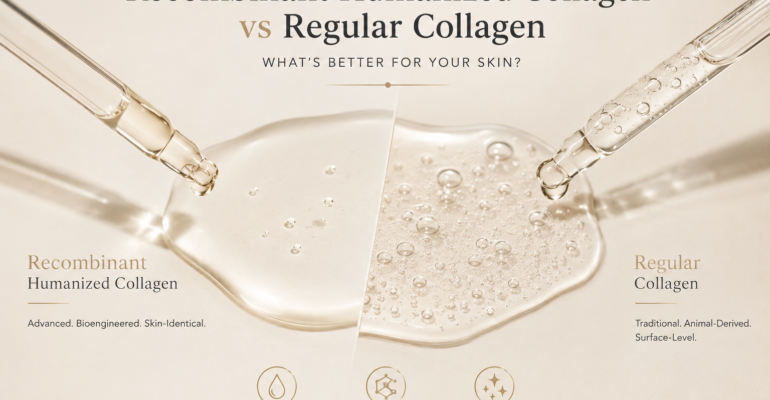
Recombinant Humanized Collagen vs Regular Collagen: What’s Actually Better for Your Skin?
Collagen has become one of the most talked-about ingredients in modern skincare. From serums and creams to supplements and treatments, collagen is often associated with firmer, smoother, and younger-looking skin.
However, not all collagen is created equal. In recent years, recombinant humanized collagen has emerged as an innovative alternative to traditional animal-derived collagen, raising an important question:
Which type of collagen is actually better for your skin?
To answer that, it’s important to understand how each form of collagen is produced, how it interacts with the skin, and what benefits it may offer.
What Is Regular Collagen?
Traditional collagen used in skincare products is typically sourced from animals such as:
- Fish (marine collagen)
- Bovine (cow) collagen
- Porcine (pig) collagen
These collagen proteins are extracted, purified, and incorporated into skincare formulations.
Regular collagen is widely used because it helps improve skin hydration and can create a temporary smoothing effect on the skin’s surface. However, due to its larger molecular structure, traditional collagen often remains on the outer layer of the skin.
Benefits of Regular Collagen
- Helps improve skin hydration
- Supports a smoother skin appearance
- Commonly available in skincare products
- Often used in collagen supplements
Limitations of Regular Collagen
- Usually sourced from animal materials
- Larger molecules may limit skin penetration
- May primarily provide surface-level moisturizing benefits
What Is Recombinant Humanized Collagen?
Recombinant humanized collagen is produced using advanced biotechnology rather than animal extraction.
Scientists use bioengineering techniques to create collagen proteins that closely mimic the structure of naturally occurring human collagen. This process allows for a highly controlled and consistent collagen source without relying on animal-derived ingredients.
The goal is to create collagen that is more compatible with human skin and capable of supporting skin repair, hydration, and elasticity more effectively.
Benefits of Recombinant Humanized Collagen
- Bioengineered to resemble human collagen
- Consistent purity and quality
- Animal-free production process
- Designed for enhanced skin compatibility
- Supports hydration and skin barrier function
Key Differences Between Recombinant Humanized Collagen and Regular Collagen
Source
Regular Collagen
- Derived from animal sources such as fish or bovine collagen
Recombinant Humanized Collagen
- Produced through biotechnology without animal extraction
Skin Compatibility
Traditional collagen originates from animal proteins, while recombinant humanized collagen is designed to more closely resemble the collagen naturally found in human skin.
This similarity may help improve compatibility with the skin’s biological environment.
Sustainability
Because recombinant humanized collagen is produced through controlled laboratory processes, it can reduce reliance on animal-derived materials and offer a more sustainable production model.
Consistency
Traditional collagen quality can vary depending on the source and extraction methods. Recombinant humanized collagen is manufactured under highly controlled conditions, helping maintain consistency between batches.
Which One Is Better for Skin Firmness and Elasticity?
Both forms of collagen can contribute to skincare formulations, but they serve slightly different purposes.
Traditional collagen is often valued for its moisturizing and skin-smoothing effects. It can help the skin feel softer and appear more hydrated.
Recombinant humanized collagen is attracting attention because it is specifically engineered to resemble human collagen, making it a promising option for advanced skincare formulations focused on hydration, elasticity, and skin barrier support.
Rather than simply coating the skin’s surface, modern formulations containing recombinant humanized collagen are designed to work in harmony with the skin’s natural structure.
Why More Advanced Skincare Brands Are Exploring Recombinant Humanized Collagen
The skincare industry continues to move toward science-driven ingredients that prioritize both effectiveness and safety.
As research advances, recombinant humanized collagen is becoming increasingly popular because it offers:
- High purity standards
- Human-collagen-like structure
- Consistent manufacturing quality
- Animal-free sourcing
- Innovative skincare applications
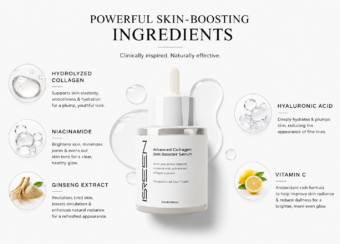
Products such as ISREEN utilize advanced collagen science to support healthier-looking skin while focusing on hydration, elasticity, and overall skin quality.
The Bottom Line
When comparing recombinant humanized collagen and regular collagen, the best choice depends on your skincare goals.
Regular collagen remains a useful ingredient for hydration and surface-level skin conditioning. However, recombinant humanized collagen represents a new generation of collagen technology designed to more closely mimic the collagen naturally found in human skin.
For consumers seeking innovative skincare solutions backed by biotechnology, recombinant humanized collagen offers an exciting advancement in collagen-focused skincare.
As skincare science continues to evolve, ingredients that support the skin’s natural structure, hydration, and barrier function are likely to play an increasingly important role in maintaining healthy, youthful-looking skin.
Frequently Asked Questions
Is recombinant humanized collagen the same as animal collagen?
No. Recombinant humanized collagen is produced through biotechnology and does not require animal-derived collagen sources.
Why is recombinant humanized collagen gaining popularity?
It is designed to closely resemble human collagen while offering consistent quality and animal-free production.
Can collagen skincare products improve skin elasticity?
Collagen-focused skincare products can help support hydration, skin barrier function, and the appearance of firmness when used consistently.
Is recombinant humanized collagen suitable for sensitive skin?
Many formulations are designed to be highly compatible with the skin, though individual product formulations may vary.
Which collagen type is more sustainable?
Recombinant humanized collagen is generally considered more sustainable because it does not rely on animal extraction processes.