Can You Use Collagen Serum With Retinol, Vitamin C & Niacinamide?
August 1, 2026 2026-08-01 20:23Can You Use Collagen Serum With Retinol, Vitamin C & Niacinamide?

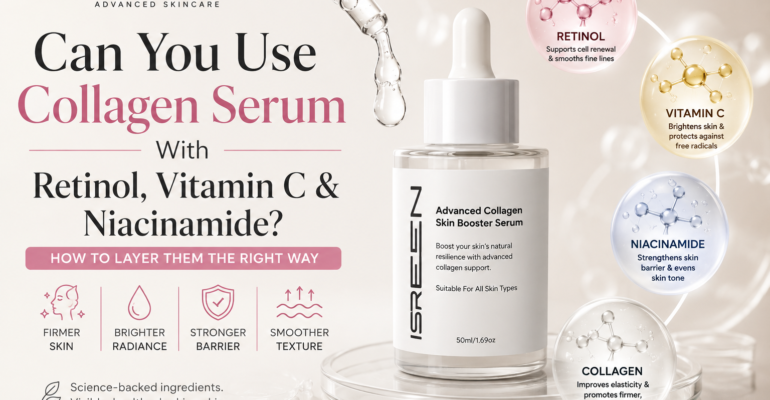
Can You Use Collagen Serum With Retinol, Vitamin C & Niacinamide?
A skincare routine can quickly become complicated when you start combining collagen serums with popular ingredients like retinol, vitamin C and niacinamide.
The good news? You don’t necessarily have to choose between them.
Each ingredient has a different role in a skincare routine. Retinol is commonly used to improve the appearance of fine lines, wrinkles, uneven texture and pigmentation. Vitamin C is valued for antioxidant and brightening benefits, while niacinamide can support the skin barrier, calm visible redness and improve the appearance of uneven tone.
A collagen-focused serum can complement these ingredients by adding hydration and supporting a routine designed around smoother, firmer-looking and more radiant skin.
The key is how you combine and schedule your products.
What Does Each Ingredient Do?
Before layering multiple products, it helps to understand what each ingredient brings to your routine.
Collagen Serum: Hydration & Firm-Looking Skin
Collagen is an important structural protein in skin. As we age, natural collagen production changes, which contributes to visible changes such as fine lines and loss of firmness.
A topical collagen serum is best viewed as part of a hydrating and skin-conditioning routine rather than a replacement for the collagen naturally produced by your body.
For ISREEN, the Advanced Collagen Skin Booster Serum is formulated with recombinant humanized collagen alongside ingredients including hyaluronic acid, niacinamide, vitamin C and ginseng.
That makes it particularly relevant for people looking for a multi-benefit serum that fits into a simple skincare routine.
Retinol: Texture & Visible Signs of Aging
Retinol is a vitamin A derivative commonly used in skincare to improve the appearance of fine lines, uneven skin tone, texture and acne.
However, retinol can also cause dryness, redness, peeling or irritation, particularly when you’re new to it. Dermatologists generally recommend introducing retinoids gradually rather than immediately using them every day.
Vitamin C: Brightness & Antioxidant Support
Vitamin C is widely used in morning skincare routines for its antioxidant properties and its role in supporting collagen formation. It can also help improve the appearance of dark spots and uneven skin tone.
Niacinamide: Barrier & Tone Support
Niacinamide, a form of vitamin B3, is one of the more versatile skincare ingredients. Research and dermatology guidance associate it with supporting the skin barrier, calming visible redness, regulating oil production and improving the appearance of uneven tone.
It can also be paired with ingredients such as retinol, vitamin C, hyaluronic acid and moisturizers.
Can You Use Collagen Serum With Retinol?
Yes, in many skincare routines, collagen serum and retinol can be used together.
But you don’t necessarily need to put both on your skin at exactly the same time.
Retinol can be drying or irritating, while a hydrating serum can help create a more comfortable routine. Cleveland Clinic specifically notes that niacinamide and hyaluronic acid can complement retinol, while moisturizer can help counteract dryness.
A simple approach:
Morning:
Cleanser → Collagen Serum → Moisturizer → SPF
Evening:
Cleanser → Retinol → Moisturizer
If your skin tolerates both well, your collagen serum may also fit into your evening routine depending on the formulation and product instructions.
If you’re new to retinol, introduce it slowly rather than adding multiple new actives at once.
Can You Use Collagen Serum With Vitamin C?
Yes.
Vitamin C and a hydrating collagen serum can work well within the same routine.
Vitamin C is commonly recommended in the morning, before sunscreen.
A straightforward morning routine could look like:
1. Gentle cleanser
2. Vitamin C serum
3. ISREEN Advanced Collagen Serum
4. Moisturizer
5. Broad-spectrum SPF
The exact order can vary depending on the textures and directions of your individual products. Generally, lighter products are applied before heavier creams.
And remember: SPF is essential. Retinoids can increase sun sensitivity, and daily sun protection is an important part of any anti-aging skincare routine.
Can You Use Collagen Serum With Niacinamide?
Yes — and this is one of the simplest combinations.
Niacinamide is generally considered a versatile ingredient and can be used with moisturizing and anti-aging ingredients, including retinol, vitamin C and hyaluronic acid.
If your collagen serum already contains niacinamide, check the ingredient list before adding another separate niacinamide serum.
You don’t necessarily need to double up on the same ingredient.
A simpler routine can often be easier to maintain.
Can You Use All Four Together?
This is where things get more complicated.
Technically, skincare routines can include multiple active ingredients, but more products don’t automatically mean better results.
If you’re using vitamin C, retinol, niacinamide and a collagen serum, you don’t need to apply every active at the same time.
Instead, divide them between your morning and evening routines.
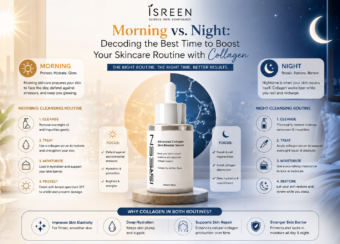
A Simple Morning + Night Routine
Morning
Step 1: Gentle cleanser
Step 2: Vitamin C
Step 3: Collagen serum
Step 4: Moisturizer
Step 5: Broad-spectrum SPF 30+
Vitamin C is commonly recommended in the morning before sunscreen.
Evening
Step 1: Gentle cleanser
Step 2: Retinol
Step 3: Collagen serum or moisturizer, depending on your skin and product directions
Step 4: Moisturizer
If your skin becomes dry or irritated, simplify your routine and reduce retinol frequency.
What About Niacinamide?
If your collagen serum already contains niacinamide, there’s usually no need to add another niacinamide serum simply for the sake of adding another step.
You can use niacinamide-containing products in the morning or evening. Cleveland Clinic notes that niacinamide can generally be used once or twice daily and can be paired with ingredients including vitamin C, retinol and hyaluronic acid.
Which Ingredients Should You Use Together?
Here’s a simple way to think about your routine:
| Ingredient | Main skincare role | Best routine placement |
|---|---|---|
| Collagen serum | Hydration + firmer-looking skin | Morning or evening |
| Vitamin C | Antioxidant + brighter-looking skin | Morning |
| Niacinamide | Barrier + tone support | Morning or evening |
| Retinol | Fine lines + texture | Evening |
| Moisturizer | Hydration + moisture retention | Morning & evening |
| SPF | UV protection | Morning |
The most important thing isn’t using every ingredient every day. It’s creating a routine your skin can tolerate and that you can consistently maintain.
What If You Have Sensitive Skin?
If your skin is sensitive, don’t introduce vitamin C, retinol, exfoliating acids and several new serums all at once.
Start with the basics:
Cleanser → Hydrating serum → Moisturizer → SPF
Then introduce one active ingredient at a time.
Retinol deserves particular caution because dryness, redness, burning and peeling can occur, especially when starting.
If you experience persistent irritation, stop the irritating product and consider speaking with a dermatologist.
Is This Routine Suitable for Every Skin Type?
The ingredients themselves aren’t automatically suitable for everyone in the same way.
Skin type, sensitivity, existing skin conditions, current products and concentration all matter.
For example, retinol may not be appropriate for everyone, and the American Academy of Dermatology advises avoiding retinoids during pregnancy.
If you have eczema, rosacea, significant sensitivity, persistent acne or another skin condition, it’s best to discuss active ingredients with a dermatologist.
The Bottom Line
You don’t have to choose between collagen serum, retinol, vitamin C and niacinamide.
They can play different roles in a well-planned skincare routine:
Vitamin C → antioxidant and brightening support
Niacinamide → barrier and tone support
Collagen serum → hydration and firmer-looking skin
Retinol → visible signs of aging and texture
The trick is not to overload your skin.
Instead, create a simple, consistent routine, introduce stronger actives gradually and always prioritize daily sun protection.
For a routine centered around hydration and a healthy-looking glow, a collagen serum such as ISREEN Advanced Collagen Skin Booster Serum can be an easy step between cleansing and moisturizing.
Frequently Asked Questions
1. Can I use collagen serum with retinol?
Yes. A collagen serum can be incorporated into a routine that also contains retinol. Since retinol can cause dryness and irritation, introduce it gradually and keep your routine hydrating.
2. Can I use collagen serum and vitamin C together?
Yes. Vitamin C and a hydrating collagen serum can be used in the same routine. Vitamin C is commonly used in the morning before sunscreen.
3. Can I use collagen serum with niacinamide?
Yes. Niacinamide is compatible with several skincare ingredients, including vitamin C, retinol and hyaluronic acid.
4. Should I use collagen serum before or after retinol?
This depends on the specific formulations and their directions. If you’re using retinol, follow its instructions and introduce it gradually. If irritation occurs, simplify your routine and focus on moisturizing and barrier support.
5. Can I use retinol and vitamin C on the same day?
Yes, but you don’t necessarily need to apply them at the same time. A common approach is vitamin C in the morning and retinol at night, which can also help keep your routine simple.
6. Is niacinamide good to use with retinol?
Yes. Niacinamide can complement retinol and may help support the skin barrier while retinol is being introduced.
7. Can I use all four ingredients every day?
You can build a routine that includes all four, but you don’t need to layer every ingredient at once. Splitting ingredients between morning and evening can make the routine easier to tolerate.
8. Should I use retinol every night?
Not necessarily. If you’re new to retinol, dermatology guidance recommends starting slowly and increasing frequency as your skin becomes accustomed to it.
9. Do I need sunscreen when using retinol?
Yes. Sun protection is particularly important when using retinoids because they can increase sun sensitivity.
10. Can I use collagen serum if I have sensitive skin?
A collagen serum may fit into a sensitive-skin routine, but every formula and skin type is different. Patch testing and introducing one new product at a time can help you identify potential irritation.